I am a Chilean-British aid worker, peace builder, leadership expert, lecturer and qualified coach. I spent just over three decades in the United Nations system — beginning in a refugee camp on the Chad-Sudan border and ending as a senior advisor to the Secretary-General in New York. Since leaving the UN in 2022, I work as a leadership coach, lecturer, public speaker, and advisor on international affairs.
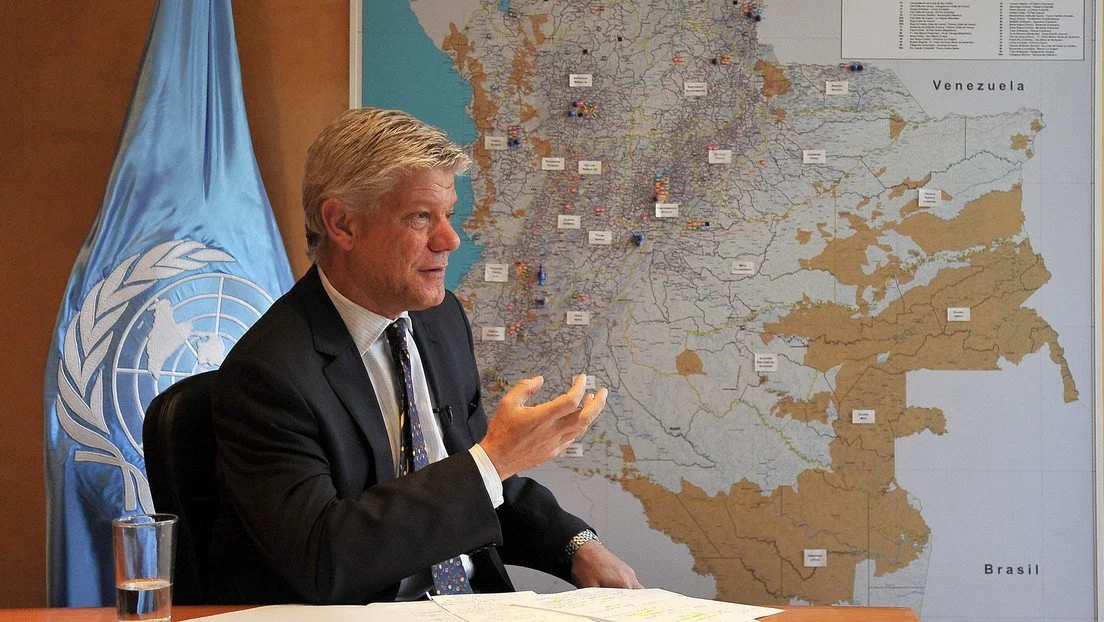
Origins and education
I was born in 1963 in the United Kingdom and grew up in Germany, where I completed my Abitur as Primus at Landheim Schondorf, Bavaria, in 1982. I then studied at the University of Oxford: a BA/MA Honours in Modern Languages at Magdalen College (1986), and an MSc in Forestry and Land Management at St Antony’s College (1987). I speak English, Spanish, German and French.
Early career: Africa, Palestine, Bosnia
Before joining the UN formally, I worked with Quaker Peace and Service in Darfur, Sudan (1987–88), designing and implementing forestry projects with refugees. I then joined UNHCR as a Field Officer in El Geneina and, as Acting Head of Sub-Office, in Juba, South Sudan, where I organised the last repatriation convoys for Ugandan refugees during the civil war.
From 1990 to 1991, I served as a Refugee Affairs Officer with UNRWA in Jerusalem, reporting on clashes at the height of the First Intifada and remaining on the West Bank through the First Gulf War.
In 1991, I was deployed to the former Yugoslavia to help establish UNHCR operations as war broke out across Croatia, Bosnia and Serbia. In June 1992 I became Head of the UNHCR Sub-Office in Sarajevo at the start of the humanitarian airlift — an operation that would become the longest in history, surpassing the Berlin airlift, delivering over 160,000 tonnes of aid to the besieged city across more than 12,000 flights over three and a half years. I subsequently headed the UNHCR Sub-Office in Split, responsible for aid delivery to Central Bosnia. In 1992 I received the Bosnia Academy of Arts and Sciences Humanitarian of the Year Award.
Chief of Office to Sergio Vieira de Mello
From 1997 to 2001, I was honored to serve as Special Assistant and Chief of Office to Sergio Vieira de Mello — later killed in the 2003 Canal Hotel bombing in Baghdad. This took me through some of the defining crises of that period: Kosovo and East Timor as head of his office during the landmark UN transitional administrations; the DRC following attacks on refugee camps in North Kivu; the earthquake response in northwest Afghanistan; and Albania during the refugee exodus from Kosovo. This work alongside Vieira de Mello is documented in Samantha Power’s Pulitzer Prize-winning biography Chasing the Flame (2008).
The Sarajevo experience left its mark. Years later, I spoke publicly about the post-traumatic stress disorder I developed as a result — including in the UNHCR podcast Awake at Night (2019) — describing being shelled in Goražde and a long road to recovery. I have tried since to speak openly about mental health in humanitarian work, where the stigma remains considerable.
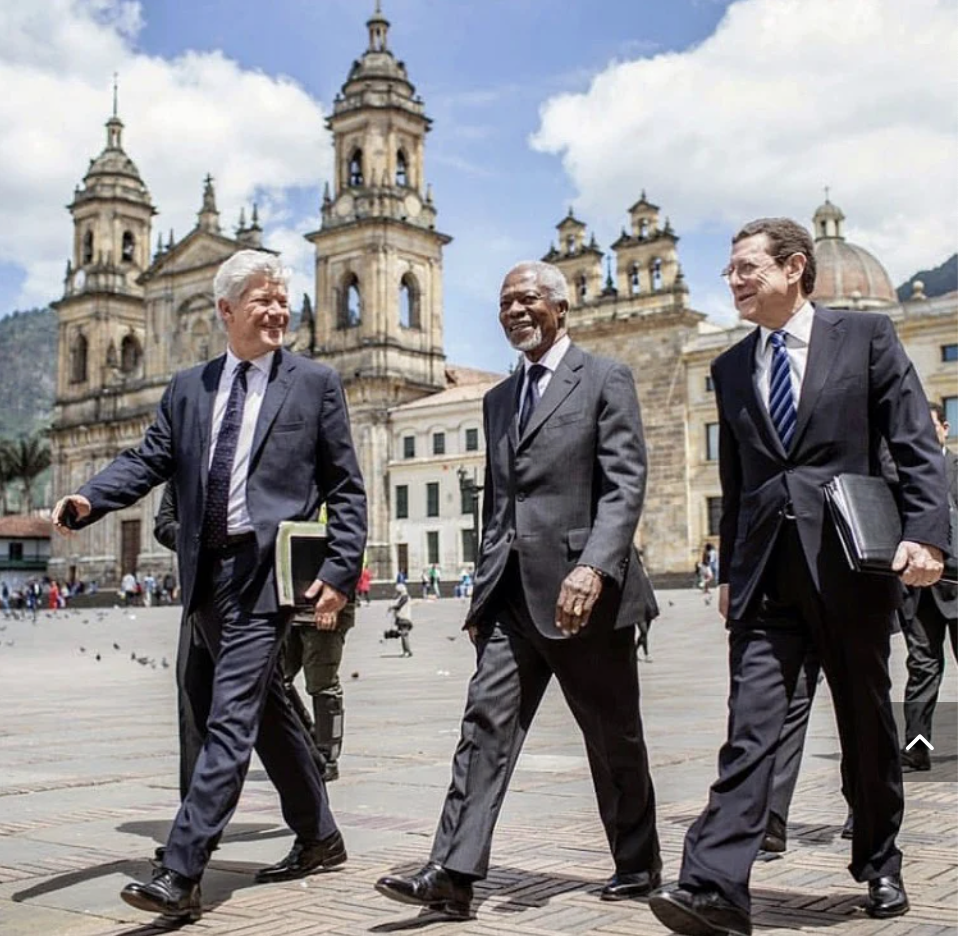
Field and headquarters (2001–2012)
A series of senior field and headquarters roles followed:
UNHCR Deputy Representative in Belgrade (2001–2003)
UNHCR Deputy Representative in Dar es Salaam, overseeing UNHCR’s largest operation in Africa (2003–2005)
Leading the UN transition team in Burundi (2005)
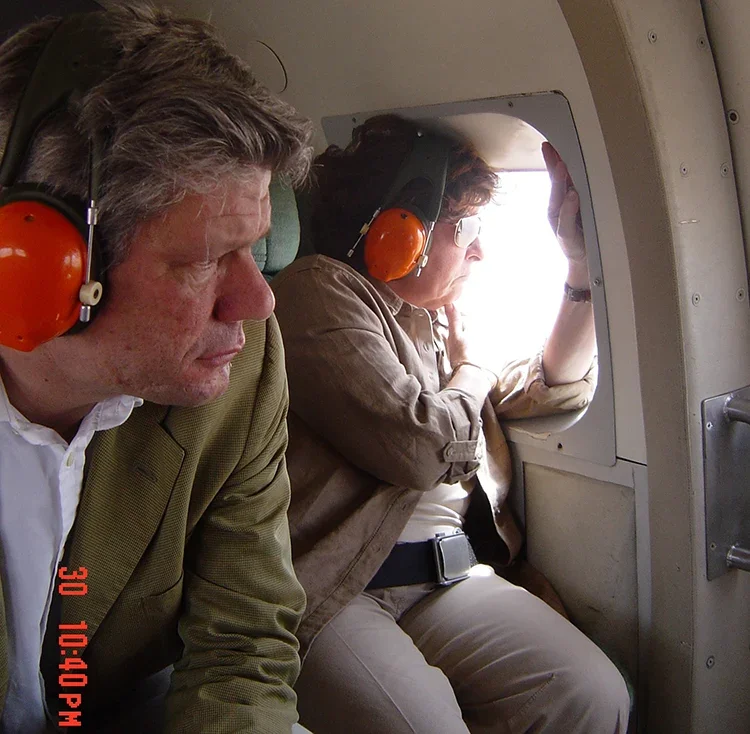
Chief of Field Operations and Technical Cooperation at OHCHR Geneva, responsible for 50 UN human rights field operations worldwide (2005–2009)
Director of the Field Personnel Division, Department of Field Support, New York — responsible for approximately 26,000 international and national posts across 30 peacekeeping and political missions (2010–2012)
During a sabbatical in 2009–10, I wrote In and Above Conflict: A Study on Leadership in the United Nations (Centre for Humanitarian Dialogue, 2010), based on interviews with dozens of senior UN leaders.
Colombia: supporting the peace process (2013–2016)
From 2013 to 2016, I served as UN Resident Coordinator, Humanitarian Coordinator and UNDP Representative in Colombia, leading the work of 23 UN entities with 2,000 staff in 60 locations across the country during the peace negotiations between the Colombian government and the FARC-EP.
Working in partnership with the Universidad Nacional de Colombia and the Catholic Church, we secured the unprecedented participation of victims’ representatives in the peace process — something I remain proud of.
I led regional roundtables and national forums to bring civil society voices directly to the negotiating table in Havana, and the UN produced studies on the humanitarian and economic costs of the conflict that were used to sustain political will for the process. I received various commendations from Colombian institutions and media for this work.
Senior positions at UN headquarters (2016–2022)
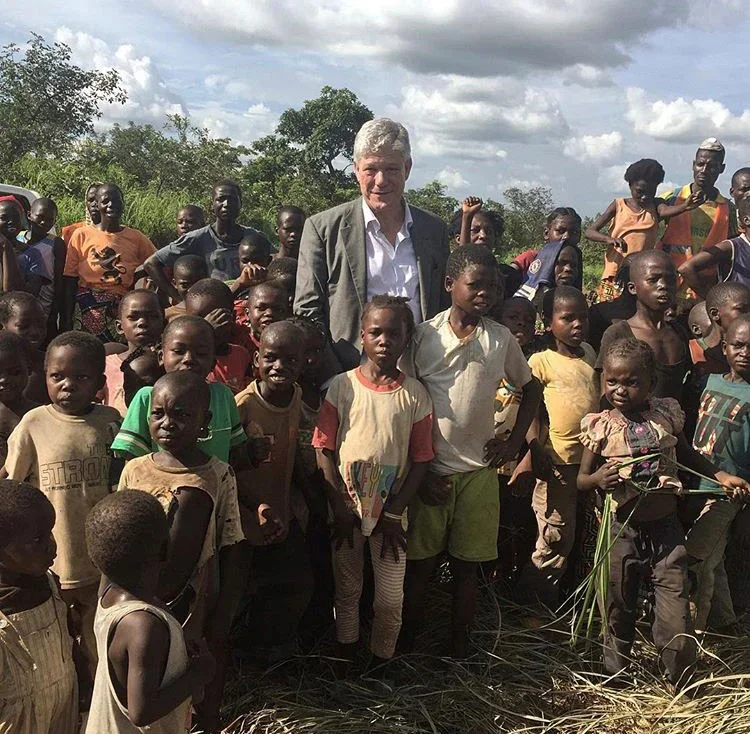
Deputy Special Representative of the Secretary-General, Humanitarian and Resident Coordinator in the Central African Republic / MINUSCA (2016–2017)
Assistant Secretary-General for Strategic Coordination in the Executive Office of the Secretary-General, under António Guterres (2017–2019): supporting the Secretary-General’s reform agenda, serving as Secretary to the Executive Committee, overseeing the UN Crisis Coordination Centre, and advising on emerging technologies
Under-Secretary-General and Special Adviser on the 75th Anniversary of the UN (2019–2021): leading the UN75 initiative, the UN’s most ambitious effort to consult the public on the future of international cooperation, gathering inputs from over 1.5 million people in 193 countries. The results fed into Our Common Agenda (2021) and ultimately the 2024 Pact for the Future.
First UN Envoy on Technology (January 2021): appointed to lead implementation of the Secretary-General’s Roadmap for Digital Cooperation, covering AI governance, digital public goods, digital inclusion, and digital trust and security.
After the UN: coaching, teaching, and reflection
Leaving the UN in 2022 gave me the space to do things I had not had time for: to reflect, to write, to teach, and to work more directly with individuals rather than institutions. I completed the Leadership Coaching Programme at IESE Business School (University of Navarra, Barcelona, 2026), accredited by EMCC Global at the EQA Senior Practitioner Level. I now work as a coach drawing on that training and on decades of experience — which includes both significant successes and notable failures, the latter being, I have found, the more instructive.
I teach a graduate course on leadership at King’s College London and lecture at universities and policy institutions across Europe and China, including Peking University, Tsinghua University, Zhejiang University, Xi’an Jiaotong-Liverpool University, Lanzhou University, and Beihang University. I serve as Senior Advisor and Fellow at the Geneva Centre for Security Policy (GCSP) and as Non-resident Senior Fellow at IFIT (Institute for Integrated Transitions).
Guangualí
The Quilimari Valley of Chile’s Coquimbo Region has been since the ‘90s my place for rest and disconnection from daily life. There I led a community endeavour to create the Santuario de Contemplación Guangualí — a contemplation sanctuary open to the public, designed as a space for meditation and quiet reflection regardless of faith or tradition. It is a place I return to, and which reflects something I have come to believe more strongly over time: that stillness and engagement are not opposites.